What is the best way to organise Pokémon cards?
For most collectors, organise by set and then by collector number. Every modern card shows its number and the set's printed total, such as 25/102, so the order is already decided for you. It makes gaps obvious, duplicates easy to spot, and any card quick to find. Sorting by type or Pokémon works for smaller, themed collections.
| Sort by | Best for | Drawback |
|---|---|---|
| Set, then number | Completing sets; large collections | One Pokémon's cards end up spread across many binders |
| Pokémon (National Pokédex order) | Collecting a favourite Pokémon or "one of each" | Hard to see which sets you have finished |
| Type (Grass, Fire, Water…) | Young collectors; colourful binders | Breaks down as the collection grows |
| Artist | Illustration collectors | Needs the illustrator credit checked on every card |
| Deck or format | Players | Cards move in and out of decks |
You can mix systems: many collectors keep a set binder for each recent expansion and one themed binder for a favourite Pokémon. Pick one rule per binder and stick to it.
How do I sort cards by set and number?
First split your cards into piles by set symbol, then put each pile in collector-number order. The set symbol and number sit at the bottom of modern cards; on Wizards of the Coast cards the symbol is just below the artwork. Cards numbered above the set total, such as 205/190, are secret rares and go at the end.
- 1.
Clear a big table
Wash and dry your hands first. Sort on a clean, dry surface with space for several piles.
- 2.
Rough sort by set
Make one pile per set symbol. If you do not recognise a symbol, put the card in a "check later" pile and look it up by its number and name on our sets page.
- 3.
Sort each set by number
Within a set, sort into rough blocks of ten, then into exact order. Sorting in stages is much faster than placing each card one by one.
- 4.
Pull out duplicates
Keep the best copy of each card in the main run, and move duplicates to a separate pile for trading, bulk storage or selling.
- 5.
Sleeve the keepers
Anything rare, holo or that you care about goes into a penny sleeve before it goes anywhere else.
Just added: singles in stock
All singles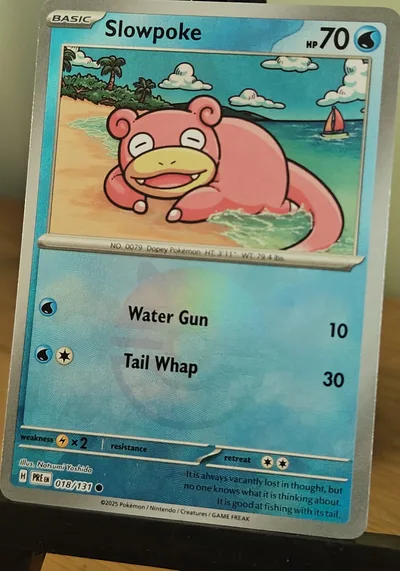
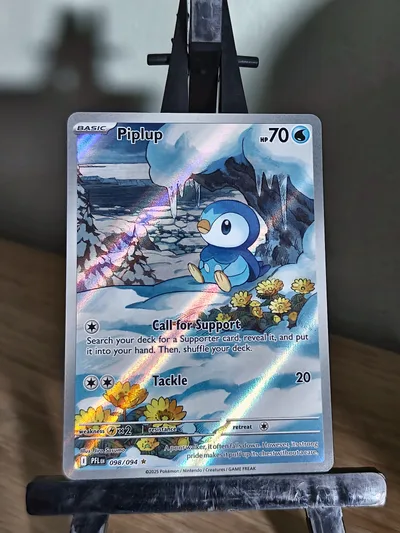
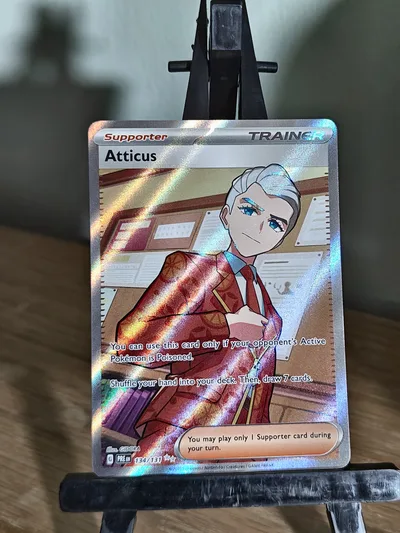
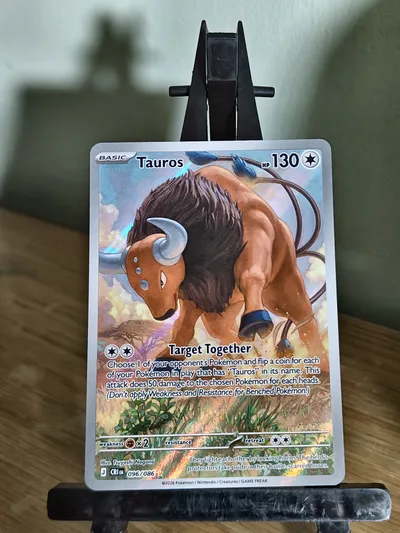
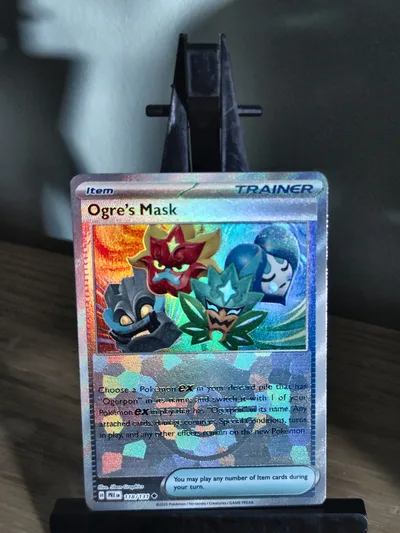
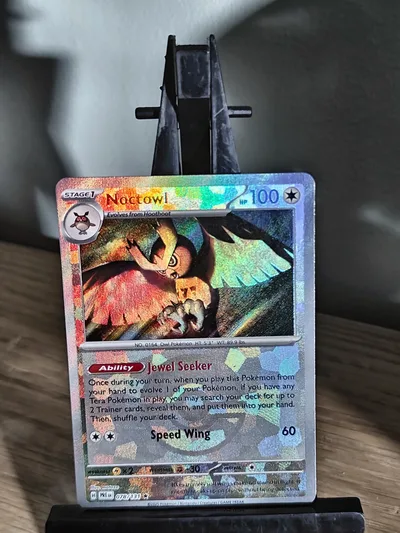
Every card is photographed front and back as sold: the card in the photo is the card you get.
How should I lay out a binder?
Use a side-loading binder with nine pockets a page, put one card in each pocket, and place cards in collector-number order from the top left. Leave empty pockets for cards you have not got yet, so you never have to shuffle the whole binder when you find one. Start each set on a new page so sets do not run into each other.
- Plan the pages: a set's total divided by nine tells you roughly how many pages you need. A 102-card set fills 12 pages (11 full pages plus three cards).
- Check capacity before you buy. Vault X, for example, lists its 20-page, 9-pocket zip binder as holding 360 cards.
- Choose acid-free, non-PVC pages, side-loading pockets and a zip or fixed-page binder rather than rings, which can press into the cards nearest the spine.
- One card per pocket. Two cards back to back rub against each other.
- Store binders upright, like books on a shelf.
Our storage guide goes into binders, sleeves and humidity in more detail.
What is a master set, and how do I organise one?
A complete set is every numbered card in an expansion. A master set goes further: Card Codex defines it as "a collection of every single unique variation of every card available under that set's name", which usually means every regular card, every reverse holo and every secret rare. Some collectors add the set's promos and stamped variants too.
Master sets are much bigger than the number on the card suggests. Prismatic Evolutions, for example, has 131 cards in its printed total but 180 cards in all once the secret rares are counted, before any reverse holos. Two layouts work well:
- Side by side: each card followed by its reverse holo. Good for seeing every version of a card together.
- In sections: the main run in number order, then the reverse holo run, then secret rares, then promos. Easier to fill as you open packs.
Whichever you choose, buy a binder big enough for the whole master set before you start. Moving hundreds of cards to a bigger binder halfway through is a chore. When you are down to the last few cards, buying the single cards you need is usually quicker than opening more packs.
How do I store bulk and duplicate cards?
Store commons, uncommons, Energy and duplicates upright in cardboard trading-card storage boxes, with dividers by set. Fill each box snugly so cards neither lean nor get squashed. Label the outside of every box with the sets inside, and keep boxes off the floor in a dry room, away from radiators, sunlight, lofts and damp cellars.
- Dividers: one per set, in release order, with the set name written on the tab.
- Box labels: set names and number ranges, so you can find a card without opening every box.
- A trade or sell box: keep duplicates you are willing to part with in one place.
- Avoid soft PVC and rubber bands. The US National Archives warns that PVC plastics "generate acids" over time; bands dent edges.
How do I keep track of what I own?
Record each card by set, number, name, variant (normal, reverse holo, holo) and condition. A spreadsheet with one row per card works, and so does a collection app or a printed checklist for each set. The set and number matter most: the same Pokémon appears on hundreds of different cards, so the name alone is not enough to identify one.
| Set | Number | Card | Variant | Condition | Where it is |
|---|---|---|---|---|---|
| Base Set | 58/102 | Pikachu | Normal | Near Mint | Binder 1, page 7 |
| Base Set | 58/102 | Pikachu | Normal | Lightly Played | Bulk box A |
| Base Set | 58/102 | Pikachu | Normal | — | Wanted: a better copy for the binder |
Record condition with the same words every time. We use Mint, Near Mint, Lightly Played, Played and Damaged; our condition guide explains each. A "where it is" column saves hours once you have more than one binder.
What about graded cards and sealed product?
Graded slabs are too heavy and thick for binders. Store them upright in a slab box or case, with the label facing the same way, and note the grader and certificate number in your records. Our graded cards are listed the same way. Keep sealed product in a cool, dry cupboard out of sunlight, with the factory wrap intact.
What should I do with cards I do not need?
Organising usually turns up duplicates and cards outside your focus. Trade them, give them to a newer collector, or sell them. If you want an offer for them, see sell your cards; our selling guide compares the other options. New to the hobby? Our beginner's guide covers choosing a collecting goal.
Questions people ask
How should I organise my Pokémon cards?
By set, then by the collector number printed at the bottom of each card. It makes gaps and duplicates obvious. Smaller themed collections can be sorted by Pokémon or type instead.
How do you organise a Pokémon card binder?
Use a 9-pocket side-loading binder, one card per pocket, in collector-number order from the top left, starting each set on a new page and leaving gaps for missing cards.
What is the difference between a complete set and a master set?
A complete set is every numbered card in a set. A master set adds every variation, usually every reverse holo and secret rare as well.
Where do secret rares go in a binder?
At the end of the set. Secret rares have numbers above the printed set total, such as 205/190, so they follow the last regular card.
How should I store bulk Pokémon cards?
Upright in cardboard trading-card boxes, with dividers by set and a label on the outside listing what is inside. Keep the boxes in a dry room off the floor.
Every card photographed as sold
Each single is photographed front and back, with its condition stated, and posted from the UK. The card in the photo is the card you get.
Sources
- Card Codex — What is a master set in Pokémon TCG?, read 16 October 2026
- TCGdex API — Prismatic Evolutions set data, read 16 October 2026
- Vault X — 9-Pocket Exo-Tec Zip Binder, read 16 October 2026
- Ultra PRO — Penny Sleeves (2.5" x 3.5"), read 16 October 2026
- US National Archives — Family Archives: General Guidance, read 16 October 2026
- TCGdex API — Base Set Pikachu (58/102), read 16 October 2026
Last updated 16 October 2026.