Ungraded ("raw") cards are sold by condition grade. A grade tells the buyer how much wear to expect without seeing the card in person. The trouble is that every marketplace uses slightly different words. This guide explains how to check a card yourself, how the main UK and European scales line up, and what our own grades mean.
What are the Pokémon card condition grades?
Most UK sellers use a five-step scale from best to worst: Mint, Near Mint, Lightly Played, Played and Damaged. Mint looks fresh from the pack, Near Mint looks unplayed, Lightly Played shows light wear, Played is clearly used, and Damaged covers creases, tears, water damage and writing. Our own grades are below.
| Grade | Short | What it means |
|---|---|---|
| Mint | M | Indistinguishable from a card fresh out of a pack, front and back. No whitening, no scratches, no marks. |
| Near Mint | NM | Looks unplayed. At most a tiny flaw you have to look for, such as a pin-prick of edge wear. No visible scratches, no dents, no creases. |
| Lightly Played | LP | Light wear you can see: a little whitening on edges or corners, minor scuffs or light scratches. Nothing structural. |
| Played | PL | Clearly used: noticeable whitening, scratches or scuffing, possibly a minor crease or bend, but the card is whole. |
| Damaged | DMG | Anything beyond Played: heavy creasing, tears, water damage, writing, peeling or major corner loss. |
Every card we sell is photographed as sold, so the card in the photos is the card you receive and you can judge its condition for yourself.
How do condition grades compare on eBay UK and Cardmarket?
They broadly line up at the top but differ lower down. eBay UK groups Mint and Near Mint as Near Mint or Better, then uses Lightly Played, Moderately Played and Heavily Played. Cardmarket has seven stricter grades, and its Light Played is fifth of seven, well below eBay's Lightly Played.
| techtrotree | eBay UK (ungraded collectible card games) | What eBay says about corners |
|---|---|---|
| Mint | Near Mint or Better | "Minor chipping" |
| Near Mint | Near Mint or Better | "Minor chipping" |
| Lightly Played | Lightly Played (Excellent) | "Moderate whitening/chipping" |
| Played | Moderately Played (Very Good) | "Major whitening/chipping" |
| Damaged | Heavily Played (Poor) or Damaged | "Major whitening/chipping with one or more corners missing" |
Cardmarket, the big European marketplace, uses seven grades: Mint, Near Mint, Excellent, Good, Light Played, Played and Poor. Its rules are stricter than most UK sellers expect. It says scratches on the surface make a card "GOOD at best", visible clouding "precludes a card from being Near Mint", and cards with whitened borders have to be listed as Poor.
Just added: singles in stock
All singles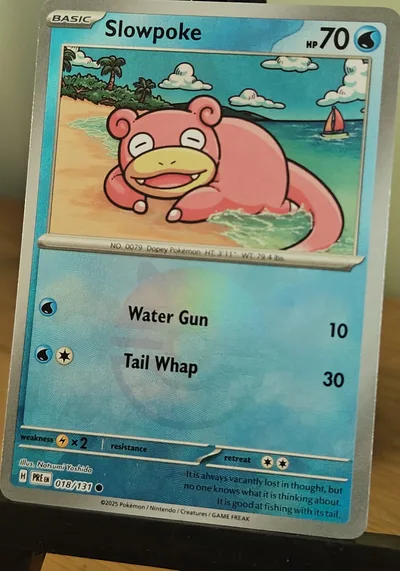
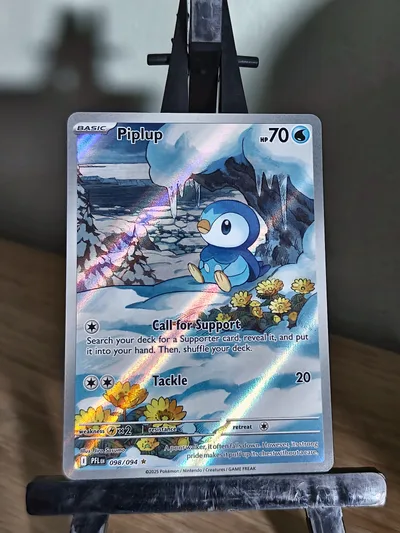
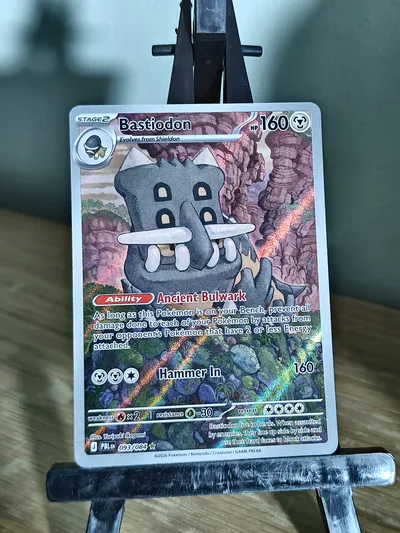
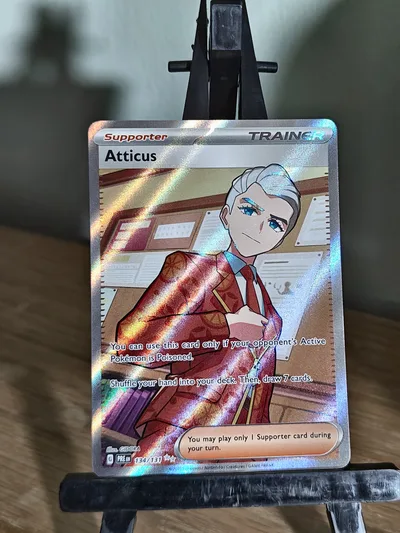
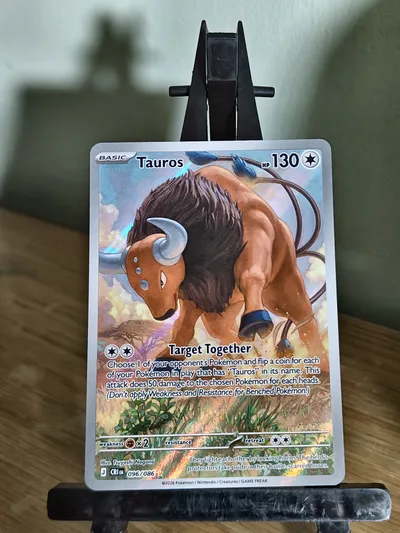
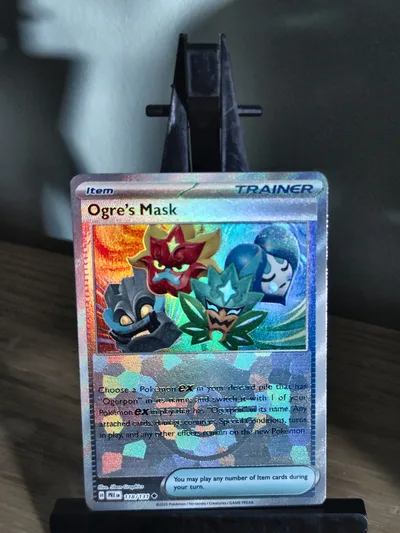
Every card is photographed front and back as sold: the card in the photo is the card you get.
How do you check a Pokémon card's condition?
Check four things on both sides: centring, corners, edges and surface. Use a bright, diffused light, tilt the card so the light skims the surface, and zoom in with a loupe or phone camera. The single worst flaw sets the grade, so a clean front does not rescue a worn back.
Use a bright, diffused light (a desk lamp bounced off white paper works) and tilt the card so the light skims across the surface. A cheap loupe or phone camera zoom helps. Check the back as carefully as the front: eBay's guidance is that "the most significant flaw will anchor the condition of the card".
1. Centring
Centring compares the border widths left to right and top to bottom. A card with a 3 mm left border and a 2 mm right border is 60/40. Raw-card buyers usually forgive slight off-centring, but graders are strict, which matters if you are thinking of grading:
| Grade | Front | Back |
|---|---|---|
| PSA 10 Gem Mint | about 55/45 or better | 75/25 or better |
| PSA 9 Mint | about 60/40 or better | 90/10 or better |
| PSA 8 NM-MT | about 65/35 or better | 90/10 or better |
| CGC Gem Mint 10 | about 55/45 or better | 75/25 or better |
| CGC Pristine 10 | 50/50 | not stated separately |
| Beckett Black Label Pristine 10 | 50/50 | 55/45 or better |
2. Corners
Look for white specks where the coloured border meets the corner ("whitening" or "chipping"), rounding, and soft or bent tips. The dark blue back shows whitening more than the front. eBay UK's scale runs from "Minor chipping" at Near Mint or Better to "Major whitening/chipping with one or more corners missing" at Heavily Played.
3. Edges
Run your eye along all four edges on both sides. Look for white nicks, fraying and rough patches. eBay UK describes edges at Lightly Played as having "Moderate whitening/chipping" and at Heavily Played as "Major whitening/chipping with tears possible".
4. Surface
- Scratches and scuffs: tilt the card under the light, especially holo and textured cards. Cardmarket says scratches make a card Good at best.
- Clouding: a hazy patch on the gloss. Cardmarket says visible clouding rules out Near Mint.
- Dents (indentations): small impressions that do not break the surface. Look at the card side-on under a skimming light.
- Creases and bends: a crease is a fold line that breaks the surface. In PSA's beginner guide, a PSA 3 "might show creasing" and a PSA 1 has "major creasing".
- Print lines and spots: lines or dots made at the factory. Graders still count them: PSA allows only a slight printing imperfection even at Gem Mint 10.
- Writing, stickers, stains: these make a card Damaged on most scales, and PSA marks cards with writing "MK".
Which condition grade is my card?
Start with the worst flaw. A heavy crease, tear, water damage or writing means Damaged; a minor crease or widespread whitening means Played; light, limited wear means Lightly Played; a speck you have to hunt for means Near Mint. Only a card with no flaw at all, even under a loupe, is Mint.
- 1.
Any crease, tear, water damage, ink or peeling?
If it is heavy, the card is Damaged. A single minor crease or bend usually means Played at best.
- 2.
Whitening you can see at arm's length, or scratches on the surface?
Played if it is widespread, Lightly Played if it is light and limited.
- 3.
Only a speck or two of wear that you have to hunt for?
Near Mint.
- 4.
Truly nothing, front and back, even under a loupe?
Mint. Be honest here: very few handled cards are truly Mint.
Does condition affect a card's price?
Yes. Condition makes a big difference to what a card sells for, and the gap is usually widest on older and rarer cards. That is why buyers ask for clear photos of the back and the corners. If you are valuing a collection, sort it by condition first, then look up sold listings for each card in that condition. Our guide to valuing old cards explains how.
Keeping a card in the condition it is in now is mostly about sleeves, a rigid holder and a dry, dark place: see how to store Pokémon cards. If you are thinking of having a card professionally graded, start with is it worth grading?. You can also browse our singles, each graded on the scale above, or our graded cards if you would rather a grading company had judged the condition. Selling to us? Sorting your cards by condition first makes the rough condition you give on our sell your cards form far more useful.
Questions people ask
What is the difference between Near Mint and Lightly Played?
Near Mint looks unplayed, with at most a tiny flaw you have to look for. Lightly Played has wear you can see, such as a little whitening on the edges or light scratches, but nothing structural.
Is a pack-fresh card always Mint?
No. Cards can leave the factory off-centre or with print lines. Check every card, even straight from a pack.
Does a crease ruin a card?
It caps the condition: on our scale a minor crease means Played at best and heavy creasing means Damaged. In PSA's beginner guide, a PSA 3 "might show creasing". The card still has value to players and collectors, just at a lower grade.
Is Cardmarket Light Played the same as Lightly Played?
No. Cardmarket's Light Played is its fifth grade of seven, below Excellent and Good. eBay UK's Lightly Played (Excellent) is its second grade. Check which scale a seller uses.
Every card photographed as sold
Each single is photographed front and back, with its condition stated, and posted from the UK. The card in the photo is the card you get.
Sources
- Cardmarket — Card Condition, read 16 October 2026
- Cardmarket — Seller Guide, read 16 October 2026
- eBay UK Seller Centre — Selling trading cards (condition tables), read 16 October 2026
- eBay UK — Card condition guidelines, read 16 October 2026
- PSA — Grading Standards, read 16 October 2026
- PSA — Getting Started With Grading, read 16 October 2026
- CGC Cards — Grading scale, read 16 October 2026
- Beckett — Card Grading, read 16 October 2026
Last updated 16 October 2026.