We do not publish price lists or "values" for cards. Prices change week to week and depend on details that only you can see on your card. What we can do is show you how to work out what your cards would sell for, the same way a careful buyer or dealer does.
Step 1: Which old cards should you check first?
Start with the holo and shiny cards, then anything with a star rarity symbol, because most cards in any set are commons and uncommons that usually sell best together as a bulk lot. Sorting first means you spend your research time on the few cards that deserve it. Make three piles:
- Holo and shiny cards: the picture has a shiny foil effect, or the whole card is foil. These deserve individual attention.
- Rares: a star rarity symbol in the bottom corner marks a rare; a circle is common and a diamond is uncommon. Our rarity guide covers the newer symbols.
- Everything else: commons, uncommons, energy and trainer cards. These are usually best sold together as a bulk lot rather than one by one.
Step 2: How do you identify exactly which card you have?
Record the card number, the set symbol, any 1st Edition stamp, the print variant, the language and the finish. Two cards showing the same Pokémon can be completely different items, and buyers price each combination separately, so every one of these details changes which sold listings you should compare against:
| Detail | Where to find it | Why it matters |
|---|---|---|
| Card number | Bottom corner, e.g. 4/102 | Identifies the exact card within its set. |
| Set | The small set symbol printed on the card. The original Base Set has no symbol. | The same Pokémon appears in dozens of sets. |
| Edition | An "Edition 1" stamp on the front (English sets up to Neo Destiny) | 1st Edition and Unlimited copies are sold as different items. |
| Print variant | For Base Set: the shadow beside the picture frame and the copyright line | Base Set has four distinct English print runs. See our Base Set guide. |
| Language | The card text | English, Japanese and European-language versions sell separately. See Japanese vs English. |
| Finish | Holo, reverse holo, or plain | The same card number can exist as holo and non-holo versions. |
Is my card 1st Edition?
Look for a small "Edition 1" symbol on the front, often on the opposite side of the card from the set symbol. According to Bulbapedia, English 1st Edition runs were produced for every set up to and including Neo Destiny, except Base Set 2. A card from a later set has no 1st Edition version, and a card without the stamp is an Unlimited print.
Bulbapedia's set pages list every card in every set with its number, and are a reliable free way to confirm what you have. The original English Base Set, for example, was released on 9 January 1999 with 102 cards, in four print runs: 1st Edition, Shadowless, Unlimited, and a later Unlimited run with a 1999–2000 copyright line.
Just added: singles in stock
All singles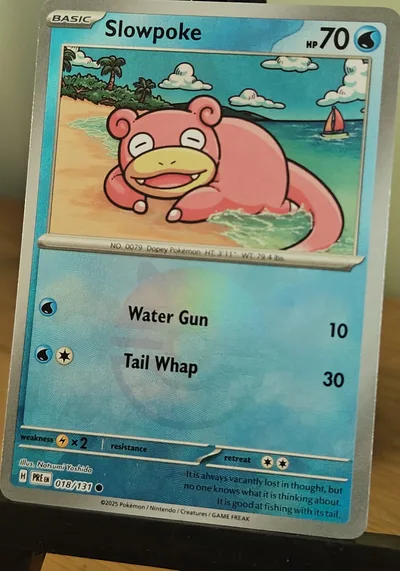
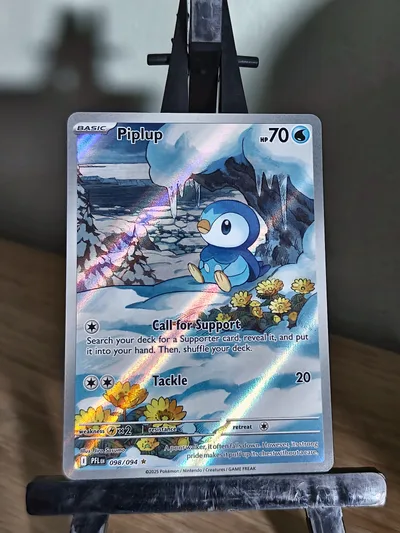
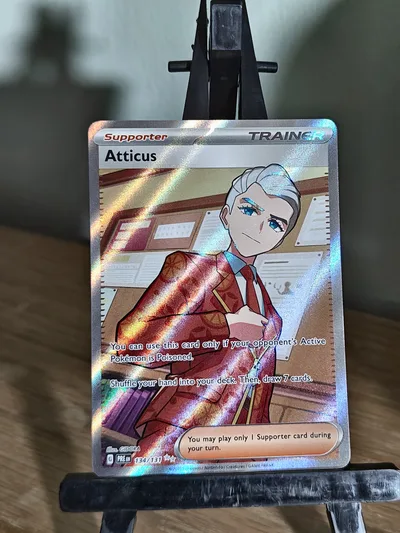
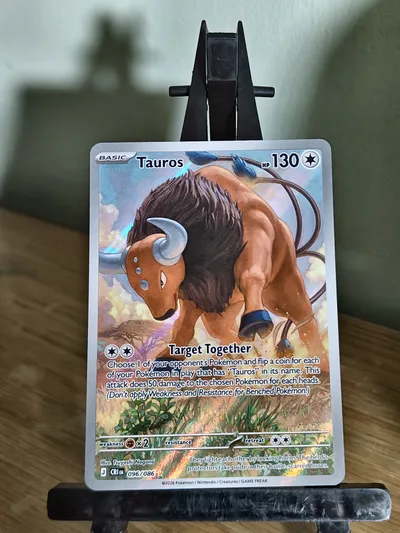
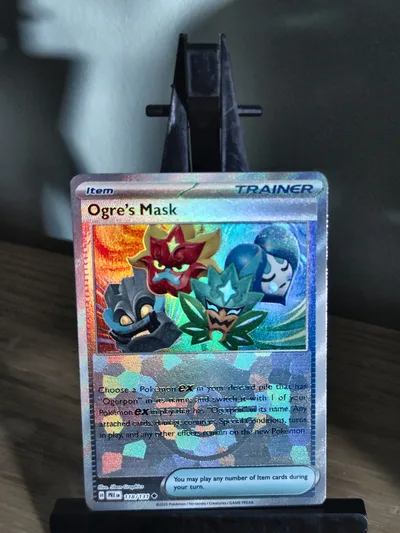
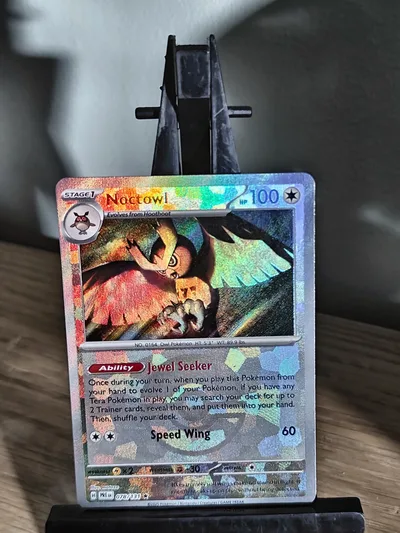
Every card is photographed front and back as sold: the card in the photo is the card you get.
Step 3: What condition is your card in?
Look at the corners, edges, surface and centring, front and back, under a good light. Whitening on the back corners, scratches across the holo, dents and creases all lower the price, and creases lower it a lot. Use our condition guide to put each card into Mint, Near Mint, Lightly Played, Played or Damaged. eBay's own advice is to compare only with cards in the same condition, so note it for every card. Every card in our singles shop is listed on the same five-grade scale with photos of the card itself, a handy reference for what each grade looks like.
Step 4: How do you check what a card has sold for?
Search eBay for the exact card by name, number and set, then filter to sold or completed listings, which cover the previous 90 days. Compare only the same print, language and condition, raw with raw and graded with graded. An asking price is what a seller hopes for; a sold price is what a buyer paid.
- 1.
Use eBay's completed and sold listings
eBay's help explains the route: go to Advanced Search, enter keywords that describe your item, choose Completed listings, and search. Its trading card advice is to search by name and number, then filter to Sold listings. eBay says completed listings cover listings that ended in the previous 90 days.
- 2.
Search precisely
Include the name, number, set and variant, for example "Charizard 4/102 Shadowless". Then read each result: is it the same print, the same language, raw or graded, and in similar condition?
- 3.
Ignore the outliers
Discard sales of graded cards when yours is raw (and vice versa), lots and bundles, and anything that looks mislabelled. Look at the middle of what is left.
- 4.
Look at enough sales
One sale is an anecdote. PSA, in its own guidance on researching a card before grading, suggests looking at what the card has sold for over the past three to six months.
- 5.
Allow for fees
The price buyers see on a UK private seller's eBay listing always includes the Buyer Protection fee, so the seller received a little less than the price shown.
Do graded cards sell differently from raw cards?
A graded card is sealed in a case with a grade from a company such as PSA, CGC, ACE or Beckett. Graded copies, especially at the top grades, sell differently from raw copies, so never compare a raw card with graded sales. If a raw card is in excellent condition and graded copies sell for clearly more, grading may be worth it. Our grading checklist does the maths, and our UK grading guide compares the companies. Our graded cards show how slabs are listed, with the grader and certificate number visible on the label.
How do you check an old card is genuine?
Old holos, especially early Charizards, are among the most counterfeited cards. Before you price or sell anything valuable, check the edge for the dark core layer, the colour of the back and the text. Our fakes guide explains each check.
Where can you get a second opinion in the UK?
If you are unsure what you have, a local card shop can often identify a card quickly. A shop's offer is what that shop will pay, which is lower than what you might get selling the card yourself, so treat it as a floor rather than a valuation. For a single card you think is special, a grading company confirms authenticity and condition, but it charges a fee and does not tell you what the card will sell for.
What is the best way to sell old Pokémon cards?
It depends on how much work you want to do. Selling good cards individually on eBay or Cardmarket usually brings the most money but takes the most time. Commons and uncommons sell best together as a bulk lot. Selling everything to a shop is fastest, at a lower price.
- Sell individually on eBay or Cardmarket: usually the most money for good cards, but the most work.
- Sell bulk as a lot: commons and uncommons together, described by era and rough count.
- Sell to a shop: fastest, at a lower price. We buy cards: see sell your cards.
Our selling guide compares fees and rules, and covers the tax position. In short, gov.uk says you are unlikely to pay tax selling personal items from your home, like the contents of a loft, and Capital Gains Tax only comes into play when you make a gain selling a personal possession for £6,000 or more.
Questions people ask
Are old Pokémon cards worth anything?
Some are, but most cards in any set are commons and uncommons. Focus on holo rares, 1st Edition and early print runs, and cards in excellent condition. Identify each card exactly and check sold listings for the same card in the same condition.
How do I find out what my Pokémon card sold for recently?
On eBay, search for the card by name and number and filter to sold or completed listings. eBay says completed listings cover listings that ended in the previous 90 days. Compare only the same card, print, language and condition.
How can I tell if my Pokémon card is 1st Edition?
Look for a small "Edition 1" stamp on the front of the card. English 1st Edition prints exist only for sets up to and including Neo Destiny, excluding Base Set 2.
Should I get my old cards graded before selling?
Only cards in excellent condition where graded copies sell for clearly more than raw ones after the full cost of grading. Our grading checklist walks through the decision.
Every card photographed as sold
Each single is photographed front and back, with its condition stated, and posted from the UK. The card in the photo is the card you get.
Sources
- eBay UK — Pricing your items (researching completed listings), read 16 October 2026
- eBay UK — Product research (completed listings cover 90 days), read 16 October 2026
- eBay UK Seller Centre — Selling trading cards, read 16 October 2026
- eBay UK — Buyer Protection: information for sellers, read 16 October 2026
- PSA — Getting Started With Grading, read 16 October 2026
- Bulbapedia — Base Set (TCG), read 16 October 2026
- Bulbapedia — 1st Edition (TCG), read 16 October 2026
- Bulbapedia — Rarity (TCG), read 16 October 2026
- GOV.UK — Selling goods or services on a digital platform, read 16 October 2026
- GOV.UK — Capital Gains Tax on personal possessions, read 16 October 2026
Last updated 16 October 2026.