Many UK collectors buy Japanese cards as well as English ones, for the artwork, the earlier release dates or the different products. Here is what is actually different, and what to know before you buy.
What is the difference between Japanese and English Pokémon cards?
Japanese cards come out first, in smaller sets that English releases later combine. Japanese packs usually hold 5 cards against 10 in English, the card back is different, rarity is shown by letter codes rather than symbols, and Japanese is not a legal language at Championship Series events in Europe. Both are graded routinely.
| Japanese | English | |
|---|---|---|
| Release timing | First. Base Set came out in Japan in October 1996. | Later. English Base Set came out in January 1999. |
| Set structure | Smaller sets, released more often | Larger sets that combine Japanese sets |
| Cards per pack | Usually 5; special sets 7, 10 or 11 | 10 game cards plus a Basic Energy and a code card |
| Packs per box | Often 30 (main sets); 10 for some high-class sets | 36 per booster display |
| Card back | Different design | The international back |
| Championship Series events in Europe | Not legal | Legal |
| Rarity marks | Letter codes (e.g. AR, SAR, SR) | Symbols (stars, circles, diamonds) |
| Grading | Graded routinely (CGC accepts standard-size Pokémon cards in all languages) | Graded by all major companies |
How do Japanese sets become English sets?
Japan releases more, smaller sets. English expansions often gather cards from one or more Japanese sets. For example, Bulbapedia notes that the cards of the Japanese Battle Partners set are included in the English Journey Together expansion, and that the Japanese Terastal Fest ex cards are included in the English Prismatic Evolutions special set. So a Japanese card usually has an English counterpart, but sometimes with a different card number, and the English set may mix cards from several Japanese releases.
Cards from these sets in stock
Shop by set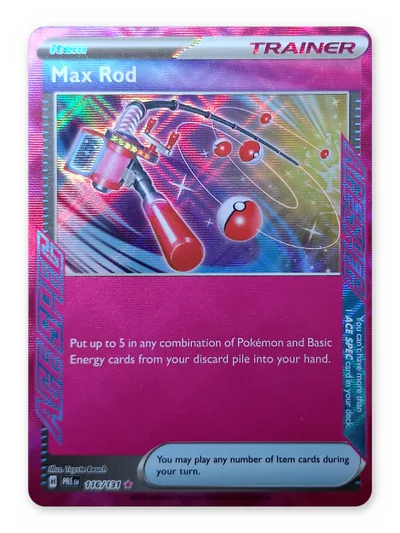
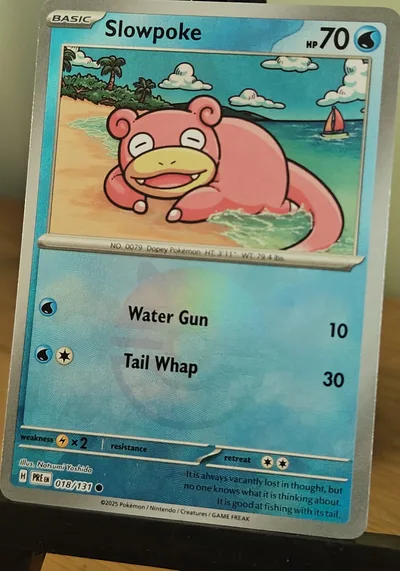
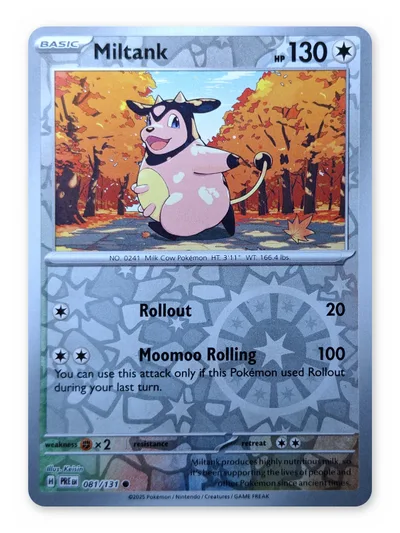
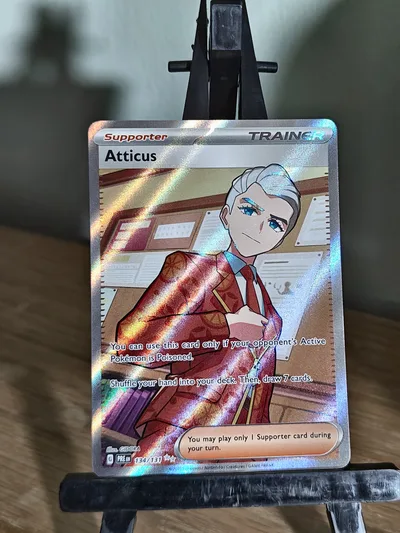
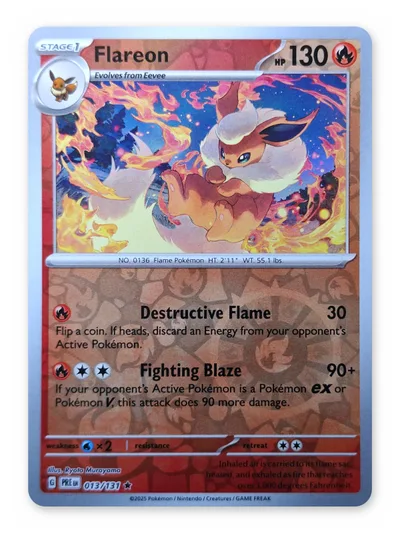
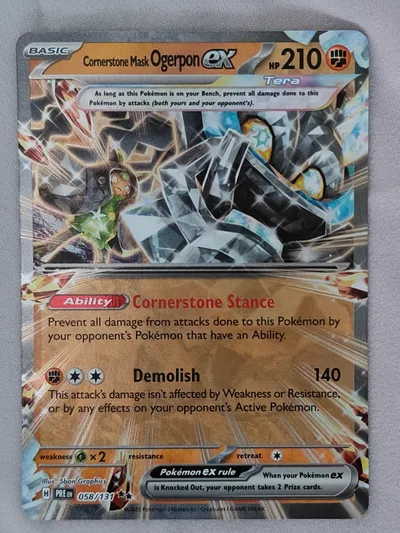
Every card is photographed front and back as sold: the card in the photo is the card you get.
How many cards are in a Japanese booster pack?
Bulbapedia says Japanese booster packs "usually have 5 cards per pack, with special sets such as VMAX Climax containing 7, 10 or 11 cards per pack". Box sizes differ by set: Battle Partners boxes held 30 packs, while Terastal Fest ex boxes held 10 packs of 10 cards.
The closest Japanese product to an English Elite Trainer Box that we found is the Premium Trainer Box ex (January 2023), which held 10 Scarlet ex and 10 Violet ex packs plus fixed cards and accessories. If you are comparing value, count the cards, not the packs: a 5-card Japanese pack is not the same as a 10-card English pack.
Can you play Japanese cards in UK tournaments?
Not at official Championship Series events. The Play! Pokémon rules list English, French, German, Italian, Portuguese and Spanish as the legal languages in Europe, and Japanese cards also have a different back, so they cannot be mixed into an English deck. Local, unofficial events are up to the organiser.
Japanese cards have a different back design from cards printed for the rest of the world. That is one practical reason they cannot be mixed into an English deck at official events. The Play! Pokémon Tournament Rules Handbook (the December 2024 revision is the latest we could open) lists the legal card languages for Championship Series events in Europe as English, French, German, Italian, Portuguese and Spanish. Japanese is not on the list. For local, unofficial events and league sessions, the handbook leaves it to the organiser.
If you want to play, buy cards in a legal language. If you only collect, the back makes no difference.
How do Japanese rarity codes compare with English symbols?
Japanese cards use letter codes for rarity, such as RR, AR, SAR, SR, UR and, from Mega Evolution, MUR. English cards use symbols for the same tiers. Our rarity guide has the full mapping, with Bulbapedia's caveat that some codes do not overlap exactly.
Both are standard-size cards (Bulbapedia gives 63 x 88 mm for TCG cards), so the same sleeves, toploaders and binders fit. Collectors often say Japanese and English printings differ in finish and card stock. We have not found an authoritative source on those differences, so judge each card in hand rather than by rule. Condition is graded the same way: see our condition guide.
Can you grade Japanese Pokémon cards?
Japanese cards are graded routinely. CGC, for example, has said since October 2020 that "all standard-sized Pokémon cards in all languages" are eligible, although some foreign promo cards may be rejected if their origin cannot be confirmed. Always check that the certificate record on the grader's website matches the card in the slab. When you compare graded sales, compare Japanese with Japanese: the two versions are different items with different buyers. Our UK grading guide compares costs, and you can browse our graded cards.
What does it cost to import Japanese cards to the UK?
Expect VAT on top of the price. Up to £135, the seller collects VAT at checkout. Above £135 you pay VAT, and possibly Customs Duty, to the delivery company before you get the parcel, plus a handling fee of £8 with Royal Mail or £12 with Parcelforce. Gifts are VAT-free up to £39.
Buying direct from Japan means importing. The rules on gov.uk, read on 16 October 2026:
- Up to £135: if you bought the goods yourself, "the seller will have included VAT in the total you paid". No Customs Duty is charged on non-excise goods at this value.
- Over £135: "You will have to pay VAT to the delivery company either before the goods are delivered or when you collect them." Customs Duty can also apply. Duty and VAT are charged on postage, packaging and insurance as well as the goods.
- Handling fee: Royal Mail charges £8 (Parcelforce £12) on items with customs charges, and £25 where goods over £900 need a full customs declaration. Couriers have their own fees.
- Gifts sent by someone else are free of VAT up to a value of £39.
- If the bill is not paid, carriers usually hold the parcel for about 3 weeks before returning it.
Should you collect Japanese or English cards?
Collect English if you play, want to complete the sets sold in UK shops, or want the widest UK resale market. Collect Japanese for the artwork, earlier releases and smaller sets. Collecting both is fine, as long as you keep them separate when you value, sell or compare graded sales.
- Collect English if you play, want to complete the sets sold in UK shops, or want the widest UK resale market.
- Collect Japanese if you love the artwork, want cards months before the English release, or prefer the smaller sets.
- Both is fine, as long as you keep them separate when valuing or selling. See how to value cards.
Upcoming English releases are on our release calendar, and our product guide explains what is in each English product. English cards from current and older sets are in our singles shop, each photographed as sold, and if you have cards to sell, see sell your cards.
Questions people ask
Are Japanese Pokémon cards the same size as English ones?
Yes. Both are standard TCG size (63 x 88 mm), so the same sleeves and holders fit.
Can I use Japanese cards in tournaments in the UK?
Not at Play! Pokémon Championship Series events: the legal languages for Europe are English, French, German, Italian, Portuguese and Spanish. For other tournaments and league sessions it is up to the organiser.
Can Japanese Pokémon cards be graded?
Yes. Japanese cards are graded routinely; CGC, for example, accepts standard-size Pokémon cards in all languages, though it may reject some foreign promos whose origin it cannot confirm.
Do I pay customs on Pokémon cards from Japan?
You pay VAT. Up to £135 the seller usually collects it at checkout; above £135 the delivery company collects VAT and any duty, plus a handling fee (£8 for Royal Mail items).
Why do Japanese packs have fewer cards?
Japanese main-set packs usually contain 5 cards, against 10 in English packs. Box sizes vary by set, so compare products by the number of cards rather than packs.
Every card photographed as sold
Each single is photographed front and back, with its condition stated, and posted from the UK. The card in the photo is the card you get.
Sources
- Bulbapedia — Booster pack (TCG), read 16 October 2026
- Bulbapedia — Battle Partners (TCG), read 16 October 2026
- Bulbapedia — Terastal Fest ex (TCG), read 16 October 2026
- Bulbapedia — Premium Trainer Box ex (TCG), read 16 October 2026
- Bulbapedia — Base Set (TCG), read 16 October 2026
- Bulbapedia — Rarity (TCG), read 16 October 2026
- Bulbapedia — Pokémon Carddass Part 1 & 2 (states TCG cards are 63 x 88 mm), read 16 October 2026
- Play! Pokémon Tournament Rules Handbook, 4 December 2024 (mirror), read 16 October 2026
- Samurai Sword Tokyo — Japanese booster box shrink wrap guide, read 16 October 2026
- CGC — What Pokémon TCG cards does CGC grade?, read 16 October 2026
- GOV.UK — Tax and customs for goods sent from abroad, read 16 October 2026
- Royal Mail — Pay a fee (customs charges), read 16 October 2026
Last updated 16 October 2026.