What counts as a vintage Pokémon card?
Most collectors use "vintage" for the English cards printed by Wizards of the Coast, from Base Set in January 1999 to Skyridge in May 2003. There is no official cut-off. Some collectors stretch it to the EX era (2003 to 2007); others think of EX as a middle period between vintage and modern. When a listing says "vintage", ask which sets it means.
A long thread on Elite Fourum, a collector forum, shows the spread of opinion: "Most people draw the line at the end of WOTC" is the most common answer, but some members cut off at the end of the EX era, and a few use age rather than era. For Japanese cards the line is often drawn at the change of card back design instead. In this guide, vintage means WOTC-era English cards.
Which sets are WOTC era? The full list in order
Wizards of the Coast released 16 English expansions between 1999 and 2003, in four series: the original Base series, Gym, Neo and e-Card. The table lists English release dates and whether each set had a 1st Edition print run.
| Set | English release | Series | 1st Edition print? |
|---|---|---|---|
| Base Set | 9 January 1999 | Base | Yes |
| Jungle | 16 June 1999 | Base | Yes |
| Fossil | 10 October 1999 | Base | Yes |
| Base Set 2 | 24 February 2000 | Base (reprint set) | No |
| Team Rocket | 24 April 2000 | Base | Yes |
| Gym Heroes | 14 August 2000 | Gym | Yes |
| Gym Challenge | 16 October 2000 | Gym | Yes |
| Neo Genesis | 16 December 2000 | Neo | Yes |
| Neo Discovery | 1 June 2001 | Neo | Yes |
| Southern Islands | 31 July 2001 | Neo (small promo-style set) | Not recorded |
| Neo Revelation | 21 September 2001 | Neo | Yes |
| Neo Destiny | 28 February 2002 | Neo | Yes (the last English 1st Edition set) |
| Legendary Collection | 24 May 2002 | Reprint set | No |
| Expedition Base Set | 15 September 2002 | e-Card | No |
| Aquapolis | 15 January 2003 | e-Card | No |
| Skyridge | 12 May 2003 | e-Card | No (the last WOTC set) |
The next English set, EX Ruby & Sapphire, came out in July 2003. RetroTCG describes it as "the first set to be adapted into English by Pokémon USA, Inc." after the rights moved back from Wizards of the Coast. Bill's Archive calls Skyridge "the last Pokémon set produced by Wizards of the Coast".
Want to see which sets we have in stock? Browse all sets or search single cards by name.
Just added: singles in stock
All singles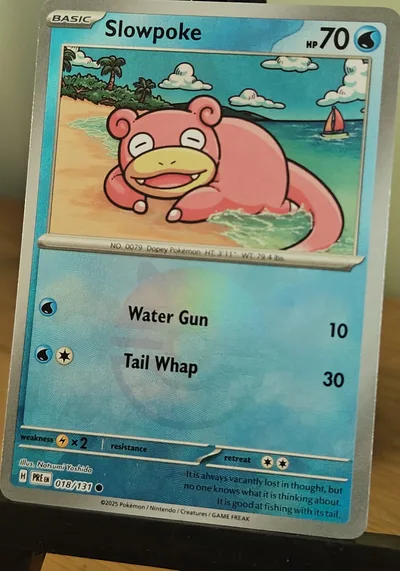
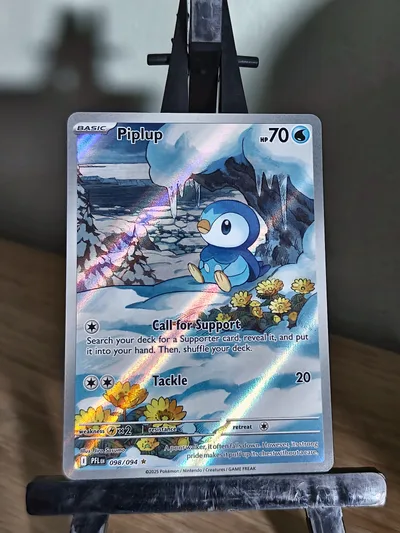
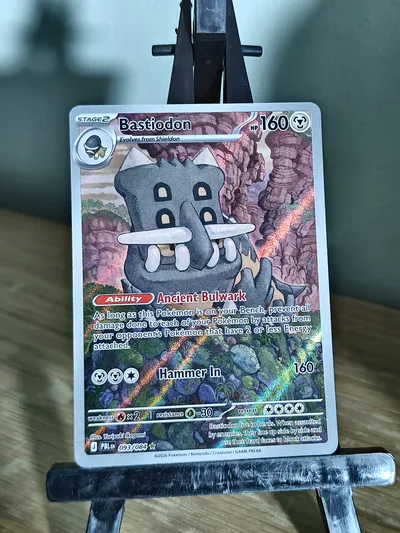
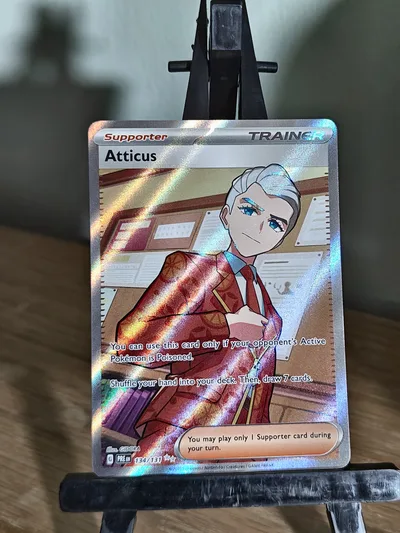
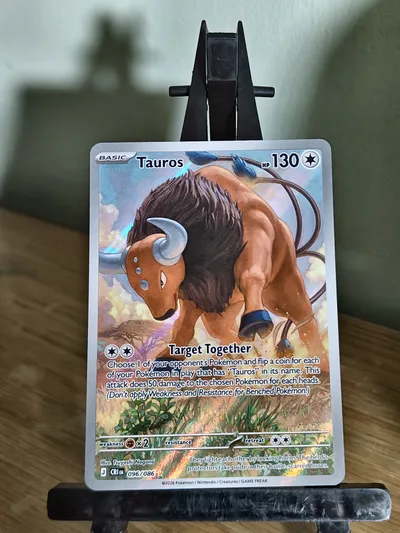
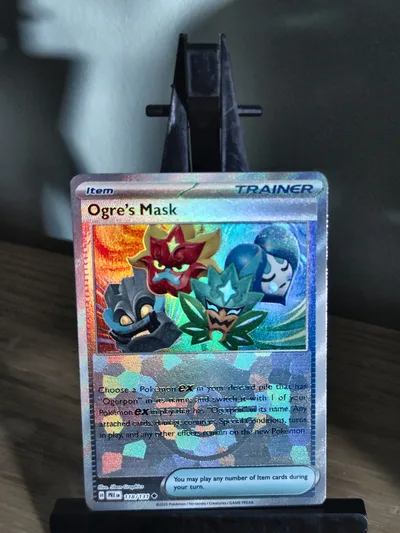
Every card is photographed front and back as sold: the card in the photo is the card you get.
What changed from set to set?
Each WOTC series added something new to the game, and many of those firsts are what collectors chase today. Knowing them helps you place a card in the right set quickly.
- Base Set, Jungle and Fossil (1999): the original 151 Pokémon era. Base Set cards have no set symbol at all; Jungle's symbol is the flower from Vileplume's head, below the art box on the right.
- Base Set 2 (2000): 130 reprints of Base Set and Jungle cards, English only, with a small "2" symbol and no 1st Edition run. Our Base Set guide shows how to tell it from the original.
- Team Rocket (2000): introduced Dark Pokémon such as Dark Charizard, and Dark Raichu (83/82), which Bill's Archive calls "the first secret card, numbered past the set's official total".
- Gym Heroes and Gym Challenge (2000): every Pokémon belongs to a named Trainer, such as Misty's Seadra or Brock's Onix.
- Neo Genesis (2000): the first set with Generation II Pokémon, the Darkness and Metal types, Baby Pokémon, and Pokémon Tools.
- Neo Revelation (2001): introduced Shining Pokémon, starting with Shining Gyarados and Shining Magikarp.
- Neo Destiny (2002): added Light Pokémon alongside Dark Pokémon, plus eight Shining secret rares including Shining Charizard (107/105). It was the last English set with 1st Edition stamps.
- Legendary Collection (2002): 110 reprints from Base Set, Jungle, Fossil and Team Rocket, and the first English set with reverse holos, using a firework-like foil over the whole card except the artwork box.
- Expedition, Aquapolis and Skyridge (2002 to 2003): the e-Card sets, with dot-code strips for the Nintendo e-Reader. Aquapolis introduced Crystal Pokémon, and Skyridge has six of them as secret rares.
How can I tell if my Pokémon card is from the WOTC era?
Look at four things: the set symbol (or the lack of one), the 1st Edition stamp, the copyright line along the bottom, and the card layout. A card with no set symbol is Base Set. A card with a widened left and bottom border carrying a dotted strip is an e-Card set. Then match the symbol and number to the set list above.
- 1.
Find the set symbol
On WOTC cards the symbol sits just below the bottom right of the artwork. No symbol means Base Set. Compare the symbol and the card number (for example 4/102) with a card database to name the set; Base Set numbers end in /102, Base Set 2 in /130.
- 2.
Look for the 1st Edition stamp
A small black "Edition 1" stamp below the artwork on the left marks a 1st Edition card. Only the main sets from Base Set to Neo Destiny had it. A stamp on a Legendary Collection or e-Card card means the card is not genuine.
- 3.
Read the copyright line
The small print along the bottom of a WOTC card credits Wizards. On Base Set, the fourth English print changed the date at the bottom right from "1999 Wizards" to "1999-2000 Wizards".
- 4.
Check the layout
e-Card sets (Expedition, Aquapolis, Skyridge) have wider left and bottom borders carrying the e-Reader dot codes, an art window rounded on the left, and the illustrator credit at the bottom centre. If you see those features, the card is from 2002 or 2003.
For Base Set itself, the difference between 1st Edition, Shadowless and Unlimited matters a lot to collectors. Our Base Set guide walks through the stamp, the shadow and the copyright line step by step.
What do 1st Edition, Shadowless and Unlimited mean?
1st Edition cards come from the first print run of a set and carry the "Edition 1" stamp. Unlimited cards come from later runs and have no stamp. Shadowless is a Base Set-only feature: early English Base Set prints lack the drop shadow along the picture frame. Most WOTC main sets exist in both 1st Edition and Unlimited.
According to Bill's Archive, every card in Jungle, Fossil, Team Rocket, Gym Heroes, Gym Challenge and each Neo main set was printed in a 1st Edition run and an Unlimited run. The reprint sets (Base Set 2 and Legendary Collection) and the e-Card sets were Unlimited only. So "1st Edition" on a card from 2002 or later is a red flag.
Are vintage Pokémon cards often faked?
Yes. Popular vintage cards, especially early Base Set holos, are a favourite target for counterfeiters, and fake 1st Edition stamps are added to genuine Unlimited cards. Check the card stock, print quality and back, and make sure every feature fits the set: a stamp on a card with a Base Set drop shadow, or on a set that never had 1st Edition, is a giveaway.
Our guide to spotting fake Pokémon cards covers the light test, font, colour and back checks in detail. If you are buying a graded vintage card, check the certificate number on the grader's own website before you pay. Our graded cards are listed with the grader and grade on the label.
Should I grade a vintage card?
Grading can make sense for vintage cards in strong condition, because a grade from a recognised company settles both authenticity and condition for a future buyer. But vintage cards often have edge wear, whitening and off-centre printing, so check condition honestly first and compare the grading fee with what the card could realistically fetch.
Our condition guide explains how to assess centring, corners, edges and surface. Then read is my card worth grading? and the UK grading guide for current fees and submission routes.
English and Japanese vintage cards
Japanese vintage sets came out earlier and were organised differently. Neo Destiny's Japanese original, Darkness, and to Light..., came out on 20 April 2001, ten months before the English set; the e-Card era's first Japanese set, Base Expansion Pack, came out on 1 December 2001, nine months before Expedition. Japanese card backs and print runs follow their own rules. See Japanese vs English Pokémon cards for how they compare.
Selling or buying vintage cards
Before you sell, identify each card exactly (set, number, edition, condition) and sleeve it. If you have a collection of old cards and want an offer, see our sell your cards page. If you are buying, shop where every card is photographed as sold so you can judge condition yourself: our singles are listed that way.
Questions people ask
What years are vintage Pokémon cards?
Most collectors mean the English Wizards of the Coast era, from Base Set in January 1999 to Skyridge in May 2003. There is no official definition, and some collectors include the EX era up to 2007.
What was the last Wizards of the Coast Pokémon set?
Skyridge, released in English on 12 May 2003. The next set, EX Ruby & Sapphire (July 2003), was the first adapted into English by Pokémon USA.
Which was the last set with 1st Edition cards?
Neo Destiny, released in English on 28 February 2002. Legendary Collection and the e-Card sets that followed were printed in Unlimited only.
How do I know which WOTC set my card is from?
Check the set symbol below the bottom right of the artwork and the card number. No symbol means Base Set; a wide border with a dotted e-Reader strip means Expedition, Aquapolis or Skyridge.
Are Legendary Collection reverse holos vintage?
Yes. Legendary Collection (24 May 2002) is a Wizards of the Coast set and the first English set with reverse holos, using a firework-like foil pattern.
Every card photographed as sold
Each single is photographed front and back, with its condition stated, and posted from the UK. The card in the photo is the card you get.
Sources
- Serebii — English Pokémon TCG set list with release dates, read 16 October 2026
- TCGdex API — Base Set 2, read 16 October 2026
- TCGdex API — Southern Islands, read 16 October 2026
- TCGdex API — Legendary Collection, read 16 October 2026
- Bill's Archive — Jungle, read 16 October 2026
- Bill's Archive — Fossil, read 16 October 2026
- Bill's Archive — Base Set 2, read 16 October 2026
- Bill's Archive — Team Rocket, read 16 October 2026
- Bill's Archive — Gym Heroes, read 16 October 2026
- Bill's Archive — Gym Challenge, read 16 October 2026
- Bill's Archive — Neo Genesis, read 16 October 2026
- Bill's Archive — Neo Discovery, read 16 October 2026
- Bill's Archive — Neo Revelation, read 16 October 2026
- Bill's Archive — Neo Destiny, read 16 October 2026
- Bill's Archive — Legendary Collection, read 16 October 2026
- Bill's Archive — Expedition Base Set, read 16 October 2026
- Bill's Archive — Aquapolis, read 16 October 2026
- Bill's Archive — Skyridge, read 16 October 2026
- Bill's Archive — Set symbols, read 16 October 2026
- RetroTCG — EX Ruby and Sapphire, read 16 October 2026
- Card Codex — A short history of each Pokémon TCG era, read 16 October 2026
- Elite Fourum — When did the "vintage" TCG end and the "modern" TCG start?, read 16 October 2026
- Elite Fourum — Base Set 1999-2000 copyright HD image list, read 16 October 2026
Last updated 16 October 2026.