What does completing a Pokémon set mean?
It means owning one of every card in a set, but collectors draw that line in three places: the main set (every number up to the printed total), the full numbered set (adding the secret rares above it), and the master set (adding every version, such as each reverse holo). Decide which before you start.
| Goal | What it includes | In 151 |
|---|---|---|
| Main set | One of every number from 1 to the printed total | 165 cards, 001/165 to 165/165 |
| Full numbered set | The main set plus the secret rares numbered above the total | 207 cards, up to 207/165 |
| Master set | Every number plus every version of it: reverse holos, and any special parallel foils | More than 207, because most main-set cards also have a reverse holo |
Collectors use the words loosely. Card Codex calls owning "at least one copy of every single numbered card" a complete set, and defines a master set as "a collection of every single unique variation of every card available under that set's name". Some collectors add the promos sold with a set too. Say which you mean when you trade or buy, so nobody is caught out.
How do you read a set number like 199/165?
The first number is the card's place in the set and the second is the printed size of the main set. Charizard ex 199/165 from 151 has a number higher than the total, which marks it as a secret rare, printed after the main list. Promo cards carry a number with no total at all.
- 1 to the total is the main list. In 151 it runs from 001/165 to 165/165.
- Above the total are the secret rares. In 151 they run from 166/165 to 207/165, so the full set is 207 cards.
- The same number in two sets is two different cards, so note the set as well as the number. If you are not sure which set a card is from, our set finder works it out from the set code, symbol or number.
- Everything else on the card is covered in our guide to reading a Pokémon card, and the rarity symbols in our rarity guide.
Cards from these sets in stock
Shop by set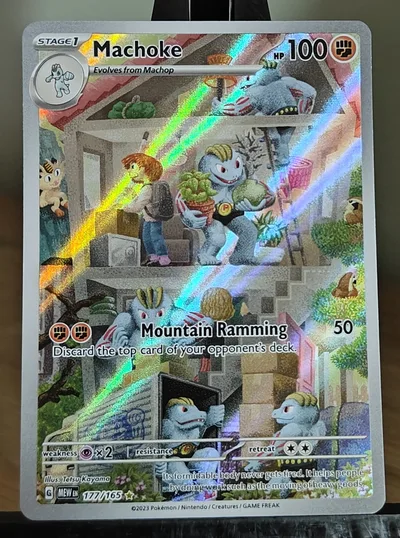
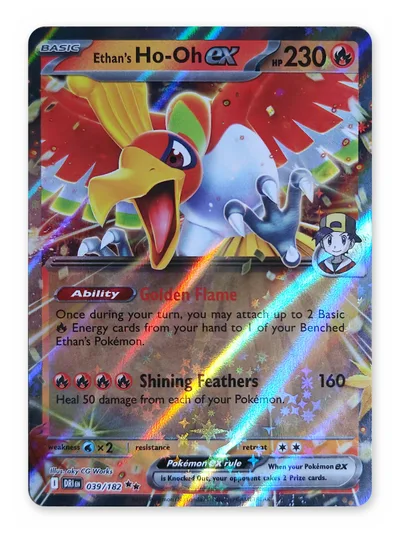
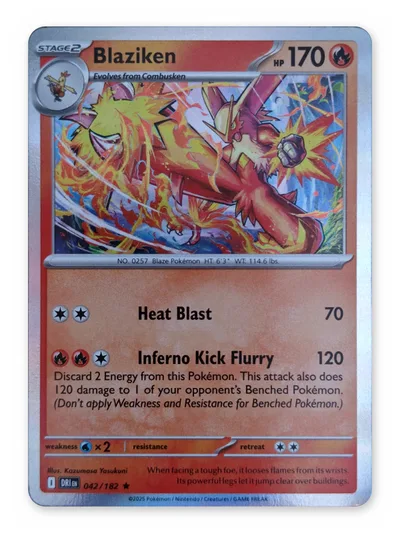
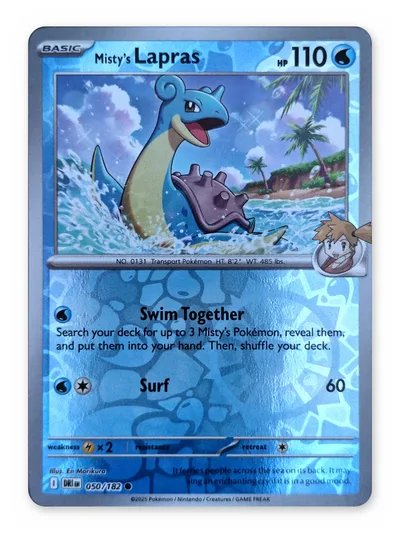
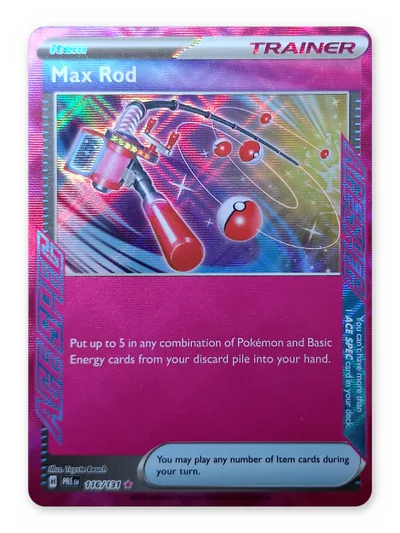
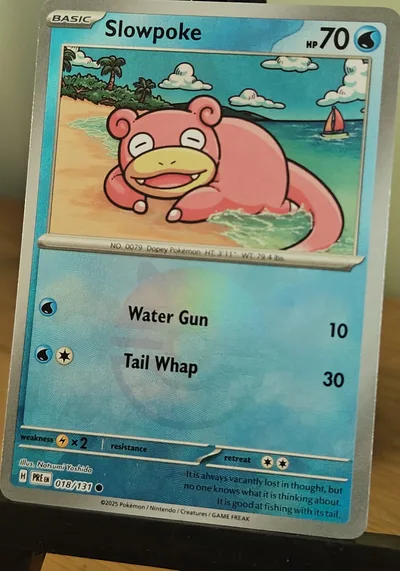
Every card is photographed front and back as sold: the card in the photo is the card you get.
How do you keep track of the cards you still need?
Use a checklist with one line per card number and tick each card as you get it. Our set pages carry one: every number in the main list and the numbers above it, with the cards we have in stock linked. Your ticks are saved in your own browser, not sent to us, so they stay on that device.
Start from all sets, or go straight to the checklist for 151, Prismatic Evolutions or Destined Rivals. A set's checklist shows while we have cards from that set in stock.
- It lists numbers, not versions. Card names appear for the cards we have listed. For a master set, keep a second tick for each reverse holo, for example in a spreadsheet column.
- Unticked cards we have in stock can be added to your basket from the checklist, so the gaps become a shopping list.
- Clearing your browser data clears your ticks too. If the list matters, keep a copy of it elsewhere.
- A spreadsheet with set, number, name, version and condition works for any set. Our organising guide has a layout.
Is it better to open packs or buy singles to finish a set?
Packs make sense early, when almost every card is new to you, and make little sense late, when nearly every card is a duplicate. Buying the specific singles you still need is usually the quicker and cheaper way to finish. A common pattern is packs or a booster box first, then singles for the gaps.
Why the last few cards take so long
Mathematicians call this the coupon collector's problem. If a set had 50 cards and each draw gave you one at random, every card equally likely, it would take about 225 draws on average to see all 50. The first half arrive quickly. The last few cost the most, because almost every draw is a card you already have.
Real packs are harder than that model. Each pack fills its slots from different rarity pools, and the highest rarities, including most secret rares, come from slots that are only occasionally upgraded (our rarity guide shows the pack layout). So chasing one particular secret rare in packs is a lottery, however many you open.
- Open packs early in your run, while they still give you new cards.
- Count duplicates as you go. When most of each pack is cards you already have, stop opening and switch to singles.
- Buy the chase cards as singles. You pay for the card you want, not for the chance of it. Our singles are photographed as sold, so the card in the photo is the card you get.
- Compare at the time. We put no prices here because they change week to week: price the singles you still need against the packs you would have to open.
New to the hobby and not sure what to buy first? Our beginner's guide compares packs and singles for a first collection, and our product types guide explains what is in each box.
Should you trade to complete a set?
Yes. Trading is the cheapest way to fill gaps, because every duplicate you hold is someone else's missing card. Swap with friends, at local game shops that run play or trade evenings, and in collector groups. Check condition face to face, agree the swap before cards change hands, and take care with postal trades.
- Bring a trade binder of your duplicates, and a list of the numbers you still need.
- Agree on condition before a swap, using the same words both ways. Our condition guide explains the usual scale.
- Postal trades with strangers carry the same risks as buying online: both sides should use a tracked service. Our scams guide covers the warning signs.
- Spares you cannot trade can be sold: our guide to selling bulk covers the commons and uncommons, and you can ask us for an offer on a collection.
How should you store a set in a binder?
Use a side-loading nine-pocket binder, one card per pocket in number order, and leave empty pockets for the cards you still need so you never have to shuffle. Plan for the full size: 207 cards at nine a page is 23 pages, before any reverse holos. Start each set on a fresh page.
Our organising guide covers master-set layouts (each card beside its reverse holo, or in sections), and our protection guide compares binder types and pages.
What makes some sets harder to complete?
Three things: size, special versions and promos sold outside booster packs. A bigger set simply has more numbers to chase. Special sets can add parallel foils on top of the usual reverse holos. And promos come in Elite Trainer Boxes, collection boxes or blisters rather than packs, if you count them at all.
- Size. TCGdex lists Prismatic Evolutions with 131 cards in its printed total and 180 in all, and 151 with 165 and 207.
- Parallel foils. For Prismatic Evolutions, PokéGuardian reported two sets of premium parallel cards "featuring either a Poké Ball or Master Ball etched in the card background", which a master set collector has to find as well.
- Promos. Card Codex describes them as special cards "included in products like an Elite Trainer Box, a collection box, or a blister pack". Decide at the start whether your master set includes them.
- Language. English and Japanese versions of a set are separate printings with their own lists, so keep them as separate checklists. Our Japanese vs English guide explains how they differ.
Where do you start?
Pick one set, decide whether you want the main set, the full numbered set or a master set, and get a checklist before you open anything. Then work from packs to trades to singles as the gaps get smaller, sleeving the best cards as they arrive and filing them into a binder as you go.
- 1.
Choose the set and the goal
A recent set you enjoy opening is the easiest start. Decide main, full numbered or master before you spend anything.
- 2.
Get the checklist
Use the checklist on the set's page (from all sets) or a spreadsheet, one line per number.
- 3.
Open, sort and tick
Open packs while they still bring new cards. Sort each pack by number, tick what is new, and sleeve the hits straight away.
- 4.
Trade the duplicates
Keep a trade binder and a wants list, and swap at a local game shop or with friends.
- 5.
Buy the last singles
When packs mostly bring duplicates, buy the exact cards left on your list from our singles or elsewhere.
- 6.
Store it as you go
File each card in its pocket in number order, so the gaps on the page match the gaps on the list.
Questions people ask
What is the difference between a master set and a complete set?
A complete set is usually one of every numbered card. A master set adds every version of each card, such as every reverse holo and any special parallel foils, and some collectors add the set's promos too.
What does 199/165 mean on a Pokémon card?
It is card 199 in a set whose main list has 165 cards. A first number higher than the second marks a secret rare, printed after the main list. Charizard ex 199/165 is from 151, which has 207 cards in all.
How many packs does it take to complete a Pokémon set?
There is no fixed number, and it grows quickly as you get close: the last cards take the most packs, because almost every card you open is a duplicate. Finishing with singles is usually quicker than opening more packs.
Do secret rares count towards completing a set?
It depends on your goal. The main set stops at the printed total, so it leaves them out. The full numbered set and the master set include them.
Do I need reverse holos to complete a set?
Only for a master set. The main set and the full numbered set need one copy of each number, in any version.
Does the set checklist save my progress?
Yes, in your own browser on that device. Nothing is sent to us, so clearing your browser data, or using another device, starts the list fresh.
Scarlet & Violet—151: dates, products and stock
Our Scarlet & Violet—151 page has the UK release date, what’s in each product and the chase cards, with whatever we have in stock from the set.
Sources
- Card Codex — What is a master set in Pokémon TCG?, read 17 October 2026
- TCGdex API — Scarlet & Violet—151 set data (165 official, 207 total; card 199 Charizard ex), read 17 October 2026
- TCGdex API — Prismatic Evolutions set data (131 official, 180 total), read 17 October 2026
- Wikipedia — Coupon collector's problem, read 17 October 2026
- PokéGuardian — Scarlet & Violet Prismatic Evolutions special set officially revealed, read 17 October 2026
Last updated 17 October 2026.